Barnawa Kaduna, Nigeria
Naija Heritage Collections Nigerian Heritage Collections
North Central · Benue

Benue State

Food Basket of the Nation

Where the Benue waters a mosaic of farmers, kings, and story-tellers.

State at a glance
Capital
Makurdi
Created
3 Feb 1976
Zone
North Central
Population
About 6 million (census estimates vary)
Land area
About 34,059 km²
Rivers & geography
Benue, Katsina-Ala, and tributaries toward the Niger confluence
The story behind the state

Yam, river, and the middle belt

Benue State was created on 3 February 1976, with Makurdi as capital on the south bank of the River Benue. It is the heart of Nigeria's middle-belt farm belt: yam barns, citrus, soybeans, and sesame that earned the slogan Food Basket of the Nation. The Tiv, Idoma, and Igede are the largest groupings, living with smaller neighbours in a corridor between the south-east forests and the northern plains.

Tiv political life historically emphasised lineages and a land-and-honour ethic rather than a single precolonial empire; the Tor Tiv stool, based at Gboko, is a twentieth-century paramountcy that now unifies that nation in the Nigerian state system. The Och'Idoma at Otukpo similarly represents Idoma kingship. Kwagh-Hir, the Tiv puppet and masquerade theatre, is one of Nigeria's most distinctive performance arts — satire, folklore, and moving sculpture in the same night.

Makurdi's bridges and river port memory, Ushongo's hills, and roadside yam markets tell a story of fertile soils and hard politics. Benue has also known farmer–herder tragedy in recent decades; an honest heritage account names the land's plenty without pretending the peace has always held. The food basket remains a real agricultural fact and a civic ambition.
Where did its name come from?
The state is named after the River Benue. Linguists and local historians often connect Benue to forms such as Binuwe, explained in Batta/Chamba-related usage as “mother of waters,” though spellings and attributions vary in the literature.

Whatever the exact etymology, the river is the true namesake: a continental stream that joins the Niger at Lokoja and has carried canoes, colonial steamers, and today's sand barges.
History

A timeline you can follow

Precolonial centuries · Lineage and migration traditions

Tiv, Idoma, and Igede oral histories describe movement, farming expansion, and encounter in the Benue valley. Details of dates remain scholarly debate.

19th century · River trade and upheaval

The Benue carried trade; the century also brought Fulani expansion on some flanks and later British river steamers.

1946 · Tor Tiv stool

The Tor Tiv paramountcy was established, giving the Tiv a single traditional head in the colonial native-authority system.

1976 · State creation

Benue State was created with Makurdi as capital (borders were later adjusted when parts went to other states).

1980s– · Kwagh-Hir on national stages

Tiv puppet theatre gained wider Nigerian and festival recognition as a named art form.

1991– · Food basket in a new map

After neighbouring states were carved around it, Benue kept its agricultural identity and middle-belt political role.

Peoples & cultures

Tiv. The largest group; lineage-based society with Gboko as traditional headquarters of the Tor Tiv.

Idoma. Centred on Otukpo and related districts, with the Och'Idoma as paramount ruler.

Igede. Known for the Igede Agba New Yam festival and hill-farm communities.

Other minorities. Including Etulo and riverine neighbours along the Benue and borderlands.

Traditional kingdoms & rulers

Tor Tiv institution (Gboko). A recognised paramount stool for the Tiv nation, created in the colonial/modern era rather than as an ancient empire.

Idoma kingship (Och'Idoma). Paramount traditional ruler of the Idoma, based in the Otukpo area.

Igede traditional stools. Clan and district rulers who preside over Igede Agba and related rites.

Geography

The land under the silhouette

Benue is mostly Guinea savannah and farm mosaic, cut by the great river and the Katsina-Ala. The south-east rises toward the Cameroon and Cross River highlands; the west leans to the Niger–Benue lowlands. Soils support yam and grains that feed cities far away.

The climate has a clear wet and dry season. Floods along the Benue can be severe. Hills such as Ushongo offer cooler picnic country above the yam fields.

Neighbours: Taraba, Nasarawa, Kogi, Enugu, Ebonyi, Cross River, and Cameroon

Watch the story

The Story of Benue in 3 Minutes

A 2–3 minute faceless mini-documentary will live here. Editors can embed a YouTube film from the steward desk. Until then, the still maps and the written story carry the heritage.

Hear the story

Listen to Benue

Audio narration (about 2–3 minutes) can be uploaded by an editor. Suggested opening: “Long before modern Nigeria existed, the lands we now call Benue…”

Through the lens of history

Photographs with caption, date and credit

No archival photograph has been verified for this page yet. We do not invent historical images. Stewards can add credited photographs from the dashboard.

Places you should know

Travel Benue

Makurdi riverfront

Makurdi

Capital on the Benue with bridges, markets, and a university presence.

Administrative and transport hinge of the Food Basket.

Gboko

Gboko

Traditional headquarters associated with the Tor Tiv.

Political-ritual centre of the Tiv nation.

Otukpo

Otukpo

Principal Idoma town and seat-related centre of the Och'Idoma.

Urban heart of Idoma heritage.

Ushongo Hills

Ushongo

Elevated landscape used for tourism and local farming.

A scenic break in the yam-and-savannah map.

Enemabia / Ikwe park landscapes

Konshisha and related areas

Hills, groves, and designated recreation spots in Tiv country.

Community tourism sites of central Benue.

Katsina-Ala

Katsina-Ala

River town and farming district on a major tributary.

A historic Tiv urban centre.

Igede country

Oju / Obi area

Homeland of the Igede Agba festival.

A distinct New Yam civilisation within the state.

Taste Nigeria

What does this state taste like?

Pounded yam with nune (sesame) soup

Ingredients. Yam, sesame-seed soup, vegetables, and meat or fish

Significance. A Tiv ceremonial and Sunday pot that tastes of the food basket.

Traditionally eaten: Festivals and family feasts

Okoho soup (Idoma)

Ingredients. Okoho stem mucilage, spices, meat or fish

Significance. A distinctive Idoma soup, often served with pounded yam or wheat-fufu.

Traditionally eaten: Special meals and ceremonies

Igede yam dishes

Ingredients. New yam, oils, and vegetable soups

Significance. Centrepiece of Igede Agba.

Traditionally eaten: Harvest festival and daily meals

Bush mango and farm snacks

Ingredients. Ogbono/bush mango, roasted yam, fruits

Significance. Middle-belt farm produce eaten on the road and at market.

Traditionally eaten: Snacks and soups

Every state has a story. Sometimes, you can taste it.

Nigeria is alive with culture

Festivals & living culture

Kwagh-Hir

Tiv puppet and masquerade theatre: mobile stages, satire, and folklore performed at night and at festivals.

Igede Agba

The Igede New Yam festival, a major harvest thanksgiving with dance and the first yam.

Alekwu ancestral rites (Idoma)

Masquerade and ancestral festivals that enforce moral memory in Idoma communities.

Tiv dancing and marriage ceremonies

Swange and related dance cultures appear at weddings, receptions, and state cultural days.

Arts & crafts. Kwagh-Hir is Benue's signature art: carved figures, narrative, and music. Tiv cloth and dance, Idoma Alekwu masks, and Igede festival costume fill the calendar. Pottery, yam-barn architecture, and contemporary middle-belt painting extend the visual culture. This is a performance-and-farm aesthetic, not a cavalry Durbar culture, though horses appear in some ceremonies.

Historical treasures. The treasures are harvest knowledge, Kwagh-Hir troupes, and the river. Traditional stools hold beads, staffs, and cloth that belong to living offices. There is no need to invent undocumented 'ancient pyramids'; the yam barn and the puppet stage are monument enough.

How well do you know Benue?

11 questions from this page

1. What is the capital of Benue?
2. Which geopolitical zone includes Benue?
3. Which nickname is widely used for Benue?
4. When was Benue created as a state (or designated as FCT)?
5. A well-known place associated with Benue is:
6. A traditional food linked with this heritage page is:
7. A major people or cultural community here is:
8. A festival or living tradition on this page is:
9. Kwagh-Hir is best described as what?
10. The name Benue comes from which geographic feature?
11. Igede Agba is primarily a festival of what?
Build Nigeria Piece by Piece™

Collect the physical story

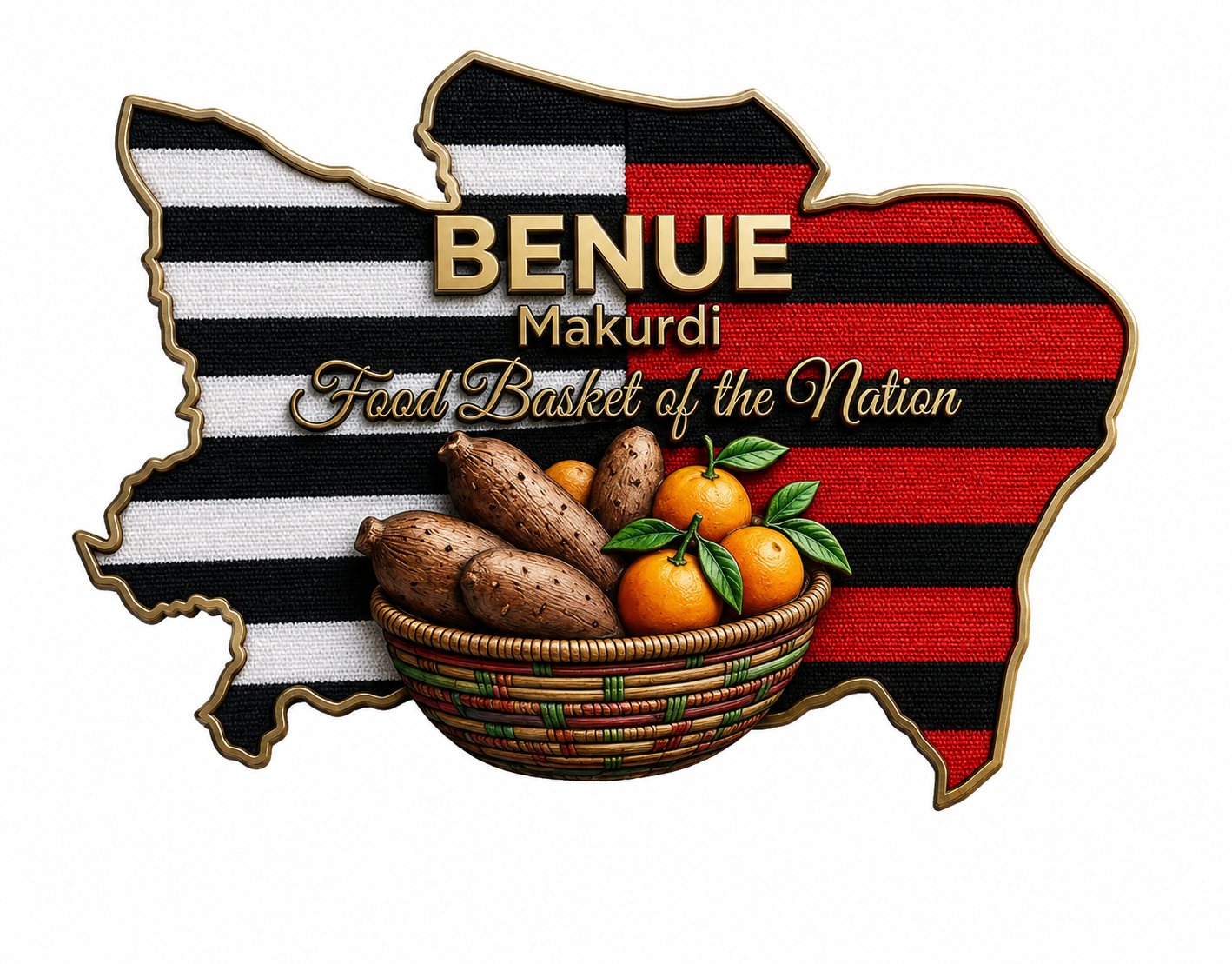
Benue State Fridge Magnet · GBP 8.00

Each magnet carries a QR code that returns you here as a Heritage Explorer.

COLLECT BENUE →